Complete Guide To Morocco Weather
Best Time to Visit Morocco for Weather
Morocco Weather: Morocco has a diverse climate to match the country’s diversity, ranging from sun-drenched Mediterranean coasts, to snow-capped mountain peaks, to the blistering heat of the Sahara desert. Whether you’re looking to escape to Taghazout in the summer, hit the slopes at Oukaimeden in winter, or take a city break in Marrakech in spring, it’s important to know Morocco’s climate by region and season.
To plan the perfect Morocco itinerary, travelers often look for information on temperature in Morocco by month, best time to visit Morocco and Morocco rainfall patterns. Casablanca has mild summer weather thanks to coastal breezes, inland cities have hot, dry summers and the Atlas Mountains are heavy with snow, so the country doesn’t fit the simple “sunny destination” label. That’s why a detailed Morocco climate guide is invaluable for anyone packing for Marrakech, Fes, Chefchaouen or the Sahara.
Here’s a month-by-month look at Morocco weather, with average temperatures, desert night-time lows, coast humidity and when the mountains get snow. Discover the best time to trek the Sahara, when to visit the Atlas for hiking vs. skiing, and why spring and fall are the ideal windows for most travelers. Looking for winter sun in Agadir, a summer escape from the inland heat, or a photography trip under a clear autumn sky? This guide will answer all your questions. By the end, you’ll know exactly when to book your flight, what to pack, and which region fits your dream Moroccan adventure.
Is Morocco Dry or Humid? What to Expect Weather-Wise → Understanding Morocco's climate before visiting or moving
Morocco’s Four Climate Zones
Before diving into monthly averages, it helps to understand that Morocco’s weather is shaped by four distinct climate zones. Along the Atlantic and Mediterranean coasts—home to cities like Casablanca, Essaouira, and Tangier—summers are warm but not extreme, with temperatures averaging 72–80°F (22–27°C) thanks to cooling sea breezes. Winters here remain mild and pleasant, hovering between 55–65°F (13–18°C), though occasional rain is common from November to March.
Move inland to cities like Marrakech and Fes, and the climate shifts dramatically. Summers are hot and dry, with daytime highs frequently exceeding 95°F (35°C), while winter nights can drop to a chilly 40°F (4°C). This zone offers sunny skies almost year-round but demands preparation for significant temperature swings between day and night.
The Atlas Mountains create a world of their own. From November to March, heavy snowfall blankets the peaks, turning areas like Oukaimeden into ski destinations just a few hours from Marrakech. Summer in the mountains is a welcome escape, with pleasant daytime temperatures of 65–75°F (18–24°C) and cool nights—perfect for trekking.
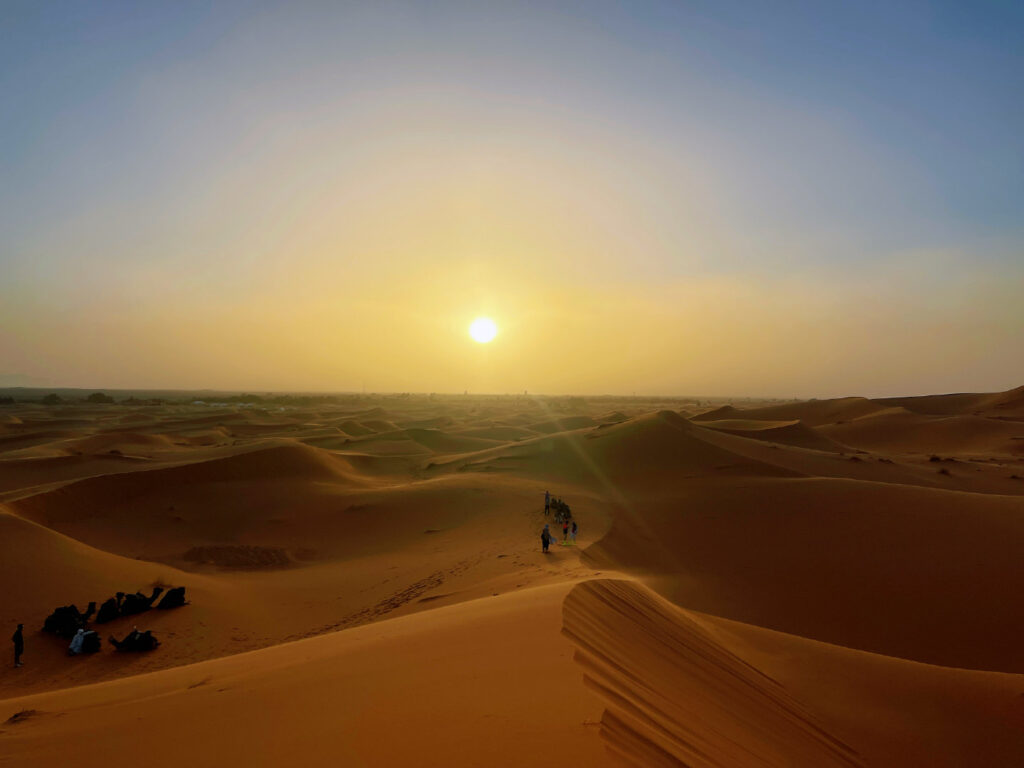
Finally, the Sahara Desert delivers Morocco’s most extreme weather. Summer days often soar above 100°F (38°C), yet winter nights can plunge to near-freezing temperatures between 45–65°F (7–18°C). Rainfall is almost nonexistent, and the sun blazes relentlessly, making proper hydration and sun protection essential for any desert adventure.
Morocco Weather Month by Month
The best time to travel to Morocco, overall, is spring, from March to May. Spring weather is warm but not hot and daytime temperatures are typically in the range of sixty-five to eighty degrees Fahrenheit, with cool nights for comfortable sleeping. Green valleys and wildflowers light up the landscape, particularly in the Atlas foothills and on the coastal plains. As spring progresses, there are less showers, and crowds are moderate before the peak summer rush. If you’re visiting in spring, don’t forget to pack in layers. Mornings tend to be chilly, but afternoons can feel like summer.
The warmest and driest time of year is summer, from June to August, but this varies greatly by region. Coastal areas such as Essaouira and Taghazout, are still pleasant due to the constant Atlantic breezes and temperatures ranging from seventy-five to eighty degrees Fahrenheit. However, inland cities such as Marrakech and Fes get very hot, with highs often reaching ninety-five to one hundred ten degrees Fahrenheit. The Sahara Desert is unbearable in the height of the day in the summer, and many tours only run at sunrise or sunset. Summer will be perfect for beach lovers and surfers along the coast, but city explorers should brace for some serious heat.
Autumn (September to November) is very similar to spring and is thus the second best time to visit Morocco. It can still be summer-like inland in early fall, often reaching the mid-eighties, but by October the heat has subsided to a comfortable seventy to eighty-five degrees Fahrenheit. This is the season of dates and olives, and the Sahara is again agreeable for camping. Crowds are light to moderate, and the sunshine is plentiful. October, especially, is a favorite month for photographers and hikers because the light is golden and the temperatures are just right.
Winter (December through February) is cold and snowy in the mountains but also has some of the most dramatic landscapes. The coast is still mild, with temperatures between fifty-five and sixty-five degrees Fahrenheit, making cities like Casablanca and Rabat quite pleasant for sightseeing. And interior cities such as Marrakech and Fes can get quite cool with daytime temperatures in the forties to sixties and nights that can feel much colder. Oukaimeden is an excellent ski resort thanks to the heavy snow in the Atlas Mountains. Nights can be cold in the Sahara Desert so if you’re planning to camp in the desert in winter, you’ll need thermals. Crowds are low except for the Christmas and New Year holiday weeks.
Best Time to Visit Morocco by Activity
The best months for city touring in Marrakech, Fes or Chefchaouen are March to May and September to November when temperatures are warm but not exhausting to walk. Schedule your trip for Sahara Desert camping from October through April, but be careful to avoid June through August when the daytime heat can be dangerous.
The best time to trek the Atlas Mountains is between April and October when the trails are snow free and the day time temperatures pleasant. If you want to ski, in the Atlas you can count on snow from December through March.The best time to go for Atlantic surfing and beach holidays is from June to September, when the water is warmest and there’s almost guaranteed sunshine.
April, May and October are great months for road trips and photography with clear skies, good driving conditions and lovely golden-hour light. If you’re a budget traveler looking for the best deals, consider November through February (minus the holiday weeks) when hotels and flights are often discounted.
Packing Tips for Morocco Weather
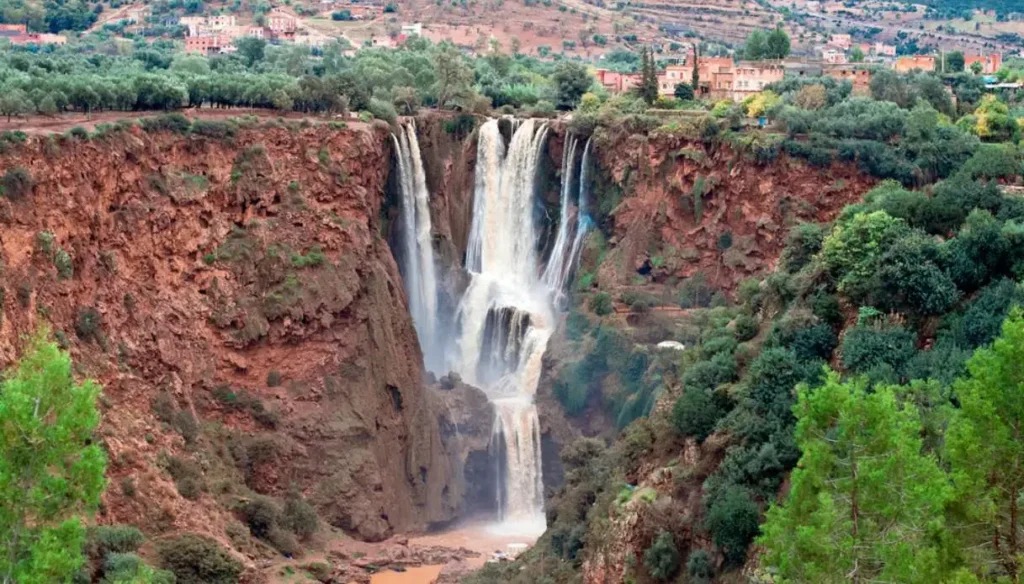
For Morocco, pack with layers and regional differences in mind. In spring and autumn, bring light layers, a jacket for chilly nights, a scarf for sun, wind or dust protection and comfy walking shoes for exploring the medina. Summer visitors heading to the coast can pack shorts, t-shirts, a sunhat, sunscreen and a light sweater for breezy evenings. When travelling to inland or desert areas in summer, wear loose, long, light-coloured clothing made of natural fabrics.
Also take strong sunglasses, lip balm and a reusable water bottle with a capacity of at least two litres. If you’re visiting cities in the winter, bring jeans, sweaters, a warm jacket, and a beanie for cold nights. For winter trips to the mountains or desert you will need thermal under layers, fleece, windproof jacket, gloves and thick socks. When you go, pack comfortable walking shoes as Moroccan cities are very walkable with lots of uneven stone and tile surfaces.
Is Morocco hot all year?
No, coastal areas are mild all year, summers are hot inland, winters cool to cold, and snow is common in the Atlas Mountains. The hottest month in Morocco is generally July (August is a close second), particularly in Marrakech and the Sahara where it frequently exceeds one hundred five degrees Fahrenheit. Rains are mostly between November and March, mostly on coast and mountains. Sahara gets almost no rain at all all year round.
Can you visit the desert in summer?
Yes, but daytime heat is extreme, so most desert tours run at sunrise or sunset to avoid the midday sun. Many experienced travelers recommend avoiding the Sahara entirely from mid-June through mid-August unless you are very comfortable with intense heat.