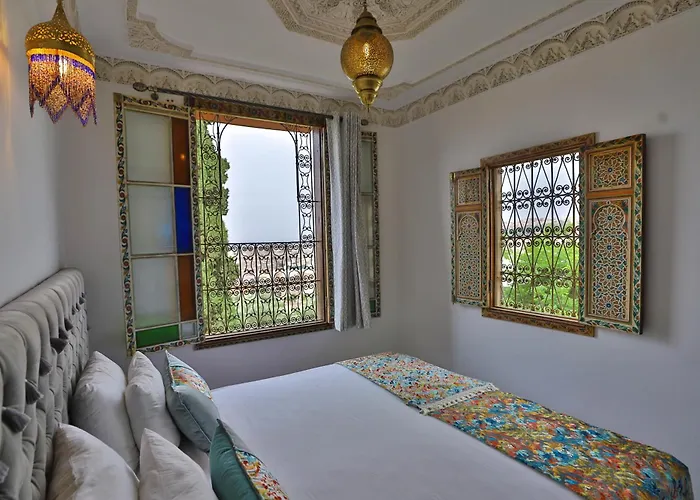
A Moroccan Riad is a traditional house or small palace built around an interior courtyard, usually with a garden, a fountain, and rooms opening inward rather than onto the street. The word comes from the Arabic riyad, meaning "garden," and it describes both the architectural style and the atmosphere you feel the moment you step through an unmarked wooden door in the medina and find a hidden oasis inside. The term Moroccan Riad comes from the Arabic word riyad, meaning garden. Historically, a riad meant literally a garden house — a residence organized entirely around a planted courtyard rather than facing outward like a Western villa. Understanding Riad meaning is the first step to understanding what is a Riad in Moroccan culture: it is not just a building type, it is a philosophy of privacy, hospitality and inward-facing beauty. Today the word is used more loosely to describe most traditional courtyard houses in a Moroccan medina, even when the original garden has been replaced by a smaller patio, but the core idea — living around a private, sheltered center — remains the same. The history of Moroccan Riads stretches back to the 9th century, when Andalusian and Amazigh (Berber) building traditions merged in cities like Fes and Marrakech. Wealthy merchants, scholars and nobles built these courtyard houses as private retreats hidden behind plain, windowless facades — a deliberate contrast between an austere exterior and a luxurious, symmetrical interior. For centuries, riads were single-family residences passed down through generations. Many fell into disrepair during the 20th century as families moved to the new city districts (the Ville Nouvelle), but starting in the 1990s a wave of restoration — much of it led by international buyers alongside local families — transformed hundreds of riads in Marrakech and Fes into the boutique guesthouses travelers know today. Riad architecture follows a consistent internal logic, no matter which city you visit. Every riad is organized around a central open-air courtyard, typically square or rectangular, with two or three floors of rooms arranged around it on all sides. This layout serves both a social and a climatic purpose. The Riad courtyard is the heart of the house — often planted with orange or lemon trees, and centered on a small fountain or reflecting pool. It brings light and air into every room while keeping the interior shielded from the sun, dust and noise of the medina outside. A Riad rooftop terrace sits above the enclosed courtyard, historically used for drying laundry, sleeping on hot nights, and — in many restored riads today — for breakfast, sunset tea, or a small plunge pool with views over the medina's minarets. Mint tea served on cushioned daybeds with rooftop views across the medina. A pergola-covered salon turns the rooftop terrace into an outdoor living room. Candlelit dinner tables and a lap pool bring the courtyard to life after sunset. Bedrooms open onto a private terrace or the courtyard, never directly onto the street. Several recurring elements define Moroccan interior design inside a riad, and recognizing them helps explain why these houses feel so distinct from any other traditional architecture in the world. Zellige tiles — small hand-cut geometric mosaic pieces — cover courtyard floors, fountain basins and lower walls in intricate, repeating patterns. Each tile is chiseled by hand from a single color of glazed terracotta, a craft passed down through generations of Fes artisans. Above the tilework, walls are often finished in hand-carved plaster (gebs) featuring calligraphy and floral motifs, while ceilings and doors use painted or carved cedar wood from the Middle Atlas forests. Every element of Riad design points inward. Rooms open onto the courtyard rather than the street, reinforcing privacy for the family while creating a sense of enclosed calm that visitors notice the moment they step inside. Travelers often ask about Riad vs Dar when browsing accommodation listings. Both are traditional courtyard houses, but they are not identical. In everyday marketing, both terms are sometimes used interchangeably for guesthouses, but a genuine Riad courtyard with greenery is what technically separates it from a Dar. Most travelers encounter the word through a Riad hotel booking rather than architectural history. A boutique Riad is a restored traditional house converted into a small guesthouse, typically with 4 to 12 rooms, a shared courtyard, rooftop terrace, and a level of personal service larger hotels rarely match — often including home-cooked Moroccan meals prepared by the resident staff. Marrakech riads are the most numerous and best known, concentrated in the medina around the souks and Jemaa el-Fnaa square. Fes riads tend to be older and more architecturally elaborate, reflecting the city's status as Morocco's cultural and artisanal capital. Smaller but excellent options also exist in Essaouira, Chefchaouen and Rabat, each with its own regional take on the courtyard-house tradition. When searching for the best riads in Marrakech or in Fes, location inside the old medina matters as much as decor — the closer to a recognizable landmark or gate, the easier arrival and daily navigation will be, especially since cars cannot enter most medina alleys. A traditional Moroccan house stay offers something a standard hotel room cannot: genuine architecture, a quiet interior courtyard away from street noise, and hosts who often know the neighborhood personally. Many riads also arrange airport transfers, private drivers and day trips, making them a natural base for travelers organizing a broader Morocco tour itinerary through our tour packages. For a deeper look at traditional building methods, the Wikipedia entry on riad houses and UNESCO's documentation on the Medina of Marrakesh both offer useful historical context alongside this guide. A Moroccan Riad is a traditional house or palace built around an interior courtyard, historically featuring a garden or fountain, with all rooms facing inward for privacy, shade and natural cooling. A Riad has a garden or courtyard with plants and often a fountain at its center, while a Dar is a similar traditional house built around a smaller, paved patio without a garden. Riads turn inward for privacy and climate control. Thick outer walls with few openings keep interiors cool and quiet, while all light, air and decoration are focused on the central courtyard. Many travelers prefer riads because they offer an authentic, intimate atmosphere inside the medina, personalized service, home-cooked meals, and traditional architecture that a standard hotel cannot replicate. Let us match you with an authentic, hand-picked Riad in Marrakech or Fes as part of your custom Morocco itinerary. Send us your travel dates below.What Is a Moroccan Riad? History, Architecture & Design Explained
What Does "Riad" Mean?
The History of the Moroccan Riad
Riad Architecture & Layout
The Courtyard
The Rooftop Terrace
Sunset Tea on the Roof
A Shaded Rooftop Lounge
The Courtyard by Night
Rooms Facing Inward
Key Design Features of a Riad
Zellige Tiles
Carved Stucco and Cedar Wood
Symmetry and Inward Focus
Riad vs Dar: What's the Difference?
Feature Riad Dar Courtyard Garden courtyard with plants, trees, a fountain Smaller, paved patio without a garden Typical size Larger, often multi-story More modest, family-scale Historical use Wealthier merchant or noble families Middle-class urban households Riads Today: Boutique Riad Hotels
Where to Find the Best Riads in Morocco
Why Stay in a Riad Instead of a Hotel?
Frequently Asked Questions
What is a Moroccan Riad, exactly?
What is the difference between a Riad and a Dar?
Why do Riads have no windows facing the street?
Is staying in a Riad better than a hotel in Morocco?
Ready to Experience a Real Moroccan Riad?